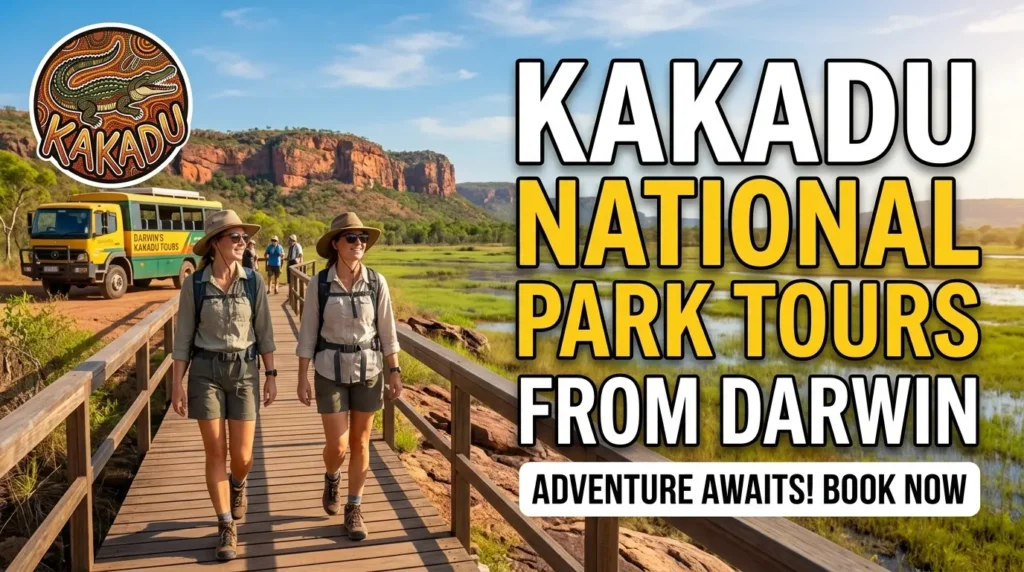
There’s something about Kakadu that stays with you long after you leave.
The ancient rock art. The vast floodplains teeming with wildlife. The sound of the bush at dusk. Kakadu National Park is one of the most remarkable places in Australia — and the good news is, it’s closer to Darwin than many people think.
Whether you’re looking for a guided tour, a self-drive adventure, or just figuring out if a day trip is even possible, this guide covers everything you need to know.
How Far Is Kakadu National Park from Darwin?
This is the first question most visitors ask — and the answer surprises a lot of people.
Kakadu is roughly 250 km from Darwin. More specifically, the main park entry point near Jabiru is about 253 km from Darwin’s CBD via the Arnhem Highway.
That’s not far at all for the Northern Territory, where distances are part of the landscape.
| Route | Distance | Estimated Drive Time |
|---|---|---|
| Darwin to Kakadu (Bowali Visitor Centre, Jabiru) | ~253 km | ~2.5 to 3 hours |
| Darwin to Yellow Water Billabong | ~280 km | ~3 hours |
| Darwin to Jim Jim Falls | ~350 km | ~4 hours (4WD needed) |
| Darwin to Ubirr Rock Art Site | ~260 km | ~2.5 hours |
One thing to note: roads within Kakadu vary a lot. Sealed roads connect the main sites, but places like Jim Jim Falls and Twin Falls require a 4WD. More on that below.
How Long Does It Take to Drive from Darwin to Kakadu?
Under normal conditions, expect about 2.5 to 3 hours to reach the park entrance from Darwin.
The drive itself is actually quite scenic. You’ll pass through Humpty Doo, roll across the Adelaide River floodplains, and start spotting the escarpment long before you arrive. It’s a flat, open highway — easy driving with minimal traffic outside of peak tourist season.
A few practical notes for the drive:
- Fill up with fuel before you leave Darwin or at Humpty Doo
- The Arnhem Highway is sealed and suitable for 2WD vehicles
- Road conditions can change quickly in the wet season (October to April)
- Check NT road conditions at ntlis.nt.gov.au before heading out
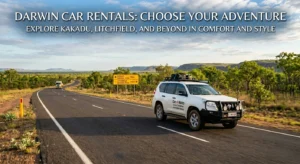
If you’re renting a car in Darwin, the drive is straightforward. A regular sedan or SUV handles the main highway just fine. For remote tracks inside the park, you’ll want a 4WD.
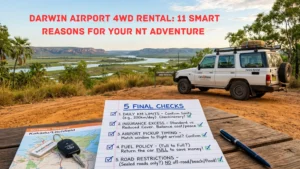
Planning to self-drive? Check out Cars4Mates Darwin Airport 4WD Hire if you want to access the more remote parts of Kakadu.
Can You Do a Day Trip to Kakadu from Darwin?
Yes — but it depends on what you want to see.
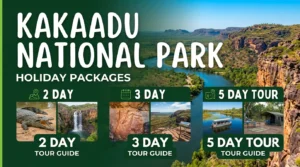
A Kakadu day trip from Darwin is absolutely possible and is a popular option for travellers with limited time. Most guided day tours run for about 12 hours, departing Darwin early in the morning and returning in the evening.
In a single day, you can typically cover:
- Ubirr – Ancient Aboriginal rock art and panoramic views from the top
- Mamukala Wetlands – Bird-filled floodplains with a walking track
- Yellow Water Billabong – One of Australia’s best wildlife cruises
- Bowali Visitor Centre – A great intro to the park’s ecology and culture
That said, Kakadu is huge — about the size of Switzerland. One day gives you a taste, but not the full experience. If you can extend to two or three days, you’ll get to explore the southern parts of the park, including Jim Jim Falls and the Gunlom plunge pool.
Verdict: A day trip is worth it. Just go in knowing you’ll want to come back.
Darwin Kakadu Day Tours: What Are Your Options?
There are two main ways to do a Kakadu day trip from Darwin.
1. Guided Day Tours
Guided tours from Darwin take care of everything — transport, entry fees, a knowledgeable guide, and often meals. Most depart from Darwin hotels or the city centre between 6:00 and 7:30 am.
What’s usually included:
- Return transport from Darwin
- Park entry fees
- Yellow Water Billabong cruise
- Guided walks to rock art sites
- Lunch and snacks
- Expert commentary on the park’s ecology and Indigenous culture
Tour prices typically range from $200 to $350 AUD per adult for a full-day guided experience. Premium small-group tours sit at the higher end.
Who this suits: Solo travellers, couples, or anyone who’d rather not self-drive.
2. Self-Drive Day Trip
If you prefer flexibility, driving yourself is a great option. You set the pace, choose your stops, and can linger wherever you like.
For a self-drive day trip, a standard 2WD or SUV is fine if you’re sticking to the main sealed roads. You’ll need to pay the park entry fee at the gate or online ($25 AUD per person as of recent pricing — always confirm current fees via parks.dpaw.wa.gov.au or the official NT parks site).
What to bring:
- Plenty of water (at least 3 litres per person)
- Sunscreen and a hat
- Insect repellent (especially near the wetlands)
- A paper map or downloaded offline map — mobile coverage is patchy inside the park
- Snacks or a packed lunch
Tip: If you’re picking up a vehicle at the airport, Cars4Mates Airport Car Rental Darwin offers convenient pickup options that save you time on the day.
Best Time to Visit Kakadu from Darwin
Kakadu has two distinct seasons — and they change everything about the experience.
The Dry Season (May to October)
This is peak visiting time. Roads are accessible, wildlife gathers around water sources, and the weather is warm but manageable. Most tours run year-round but are most frequent during this period.
- Best for: Wildlife viewing, walking tracks, 4WD adventures
- Temperatures: 25–32°C daytime
- Crowds: Higher, especially June–August
The Wet Season (November to April)
The wet transforms Kakadu into a lush, dramatic landscape. Waterfalls are at their peak, and the floodplains fill with water. However, many roads — including the road to Jim Jim Falls — close entirely.
- Best for: Waterfalls, photography, fewer crowds
- Watch out for: Road closures, humidity, potential flooding
For most first-time visitors, June to August offers the best all-round conditions.
What to See in Kakadu: A Quick Overview
Even on a day trip, you’ll want to prioritise. Here are the highlights worth planning around.
Ubirr Rock Art Site
One of the most significant Aboriginal rock art sites in the world. The paintings here date back thousands of years. The short walk to the lookout at the top offers sweeping views over the floodplains — especially stunning at sunset.
Yellow Water Billabong
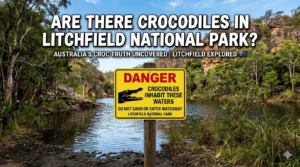
A cruise here is genuinely unmissable. Saltwater crocodiles, jabirus, sea eagles, and dozens of other species all visible from the water. Sunrise and early morning cruises are the most atmospheric.
Nourlangie Rock
Another major rock art site with well-maintained walking tracks. Less crowded than Ubirr, with equally impressive paintings and a dramatic escarpment backdrop.
Jim Jim Falls & Twin Falls
Only accessible by 4WD (and only in the dry season). Worth the effort for those seeking a more remote experience. Swimming at the base of Jim Jim Falls is one of those bucket-list moments.
Gunlom (Waterfall Creek)
In the southern part of the park. The infinity plunge pool at the top of the falls has become iconic — and for good reason. Requires a moderate hike to reach.
Is Kakadu Worth It for a Day Trip from Darwin?
Honestly? Yes.
Even a single day in Kakadu gives you something most Australian destinations can’t — a genuine sense of ancient, living wilderness. The rock art isn’t just old. It’s a continuous cultural story still told by Bininj and Mungguy people today.
The wildlife is real and abundant. The landscapes are cinematic. And the scale of the place — even glimpsed in a day — is unlike anything else in the country.
If you’re based in Darwin and have even one free day, Kakadu deserves it.
Frequently Asked Questions
Can you drive to Kakadu from Darwin in a normal car?
Yes. The main highway (Arnhem Highway) is fully sealed and suitable for any standard vehicle. You only need a 4WD if you plan to visit remote sites like Jim Jim Falls.
How much does it cost to enter Kakadu National Park?
Entry fees apply and are per person. As of recent updates, the fee is around $25 AUD per adult. Always check the official Parks Australia website for current pricing before you visit.
Is Kakadu open year-round?
The park itself is open year-round, but some roads and sites close during the wet season due to flooding. The dry season (May–October) offers the most access.
Do I need to book a tour in advance?
For peak season (June–August), yes — popular tours fill up quickly. Day tours from Darwin are best booked at least a few days ahead.
What’s the best single thing to do in Kakadu?
Hard to pick just one, but the Yellow Water Billabong cruise consistently rates as a highlight for first-time visitors. It’s one of the best wildlife experiences in Australia.
How big is Kakadu National Park?
Nearly 20,000 square kilometres — roughly the same size as Slovenia. It’s the largest national park in Australia.
Getting There: Practical Tips for Darwin Visitors
- From Darwin CBD: Head east on the Stuart Highway, then turn onto the Arnhem Highway at Humpty Doo. Follow it all the way into the park.
- Fuel up: Options are limited inside the park. Jabiru has a petrol station, but prices are higher. Fill up in Darwin or Humpty Doo.
- Phone signal: Expect little to none inside the park. Download maps and park information before you leave.
- Car hire: If you need a reliable vehicle for the trip, Cars4Mates SUV and Family Car Rental Darwin has options that suit families and groups planning a Kakadu self-drive.
Kakadu is one of those rare places that genuinely lives up to its reputation. Whether you have a day or a week, it rewards you for making the effort. And from Darwin, the effort is smaller than most people expect.
Plan it. Drive it. Explore it.
Always check current road conditions and park entry requirements before visiting. Information in this guide reflects general conditions and may change seasonally.