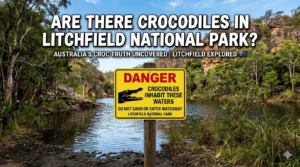
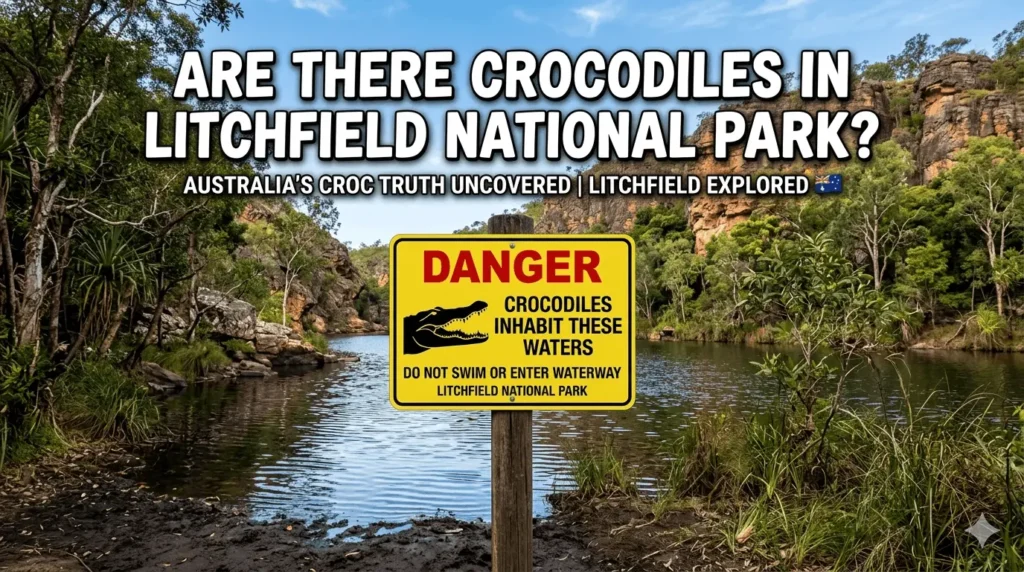
The Short Answer: Yes — But It’s Complicated
Litchfield National Park is one of the Northern Territory’s most loved destinations. Thousands of Australians visit every year to swim under waterfalls and explore the bush.
But one question comes up constantly: Are there crocodiles in Litchfield?
Yes, crocodiles can be found in Litchfield National Park. However, the risk level varies significantly depending on where you swim. Some spots are regularly monitored and considered safe. Others are not.
Understanding the difference could save your life.
What Types of Crocodiles Live in the Northern Territory?
Australia has two crocodile species, and both exist in the NT.
Saltwater Crocodiles (Crocodylus porosus)
- Australia’s most dangerous reptile
- Can grow over 6 metres long
- Aggressive and territorial
- Capable of travelling far inland, especially during the wet season
Freshwater Crocodiles (Crocodylus johnstoni)
- Smaller, typically 2–3 metres
- Generally shy around humans
- Rarely attack unless provoked
- Common in inland waterways across the NT
Both species have been recorded in and around Litchfield National Park. Saltwater crocodiles are the primary concern for visitor safety.
Crocodile Activity in Litchfield National Park
Litchfield sits roughly 100 kilometres south-west of Darwin. It’s an inland park — but that doesn’t make it croc-free.
Saltwater crocodiles move inland during the wet season (November to April). Floodwaters connect river systems, allowing crocs to access areas they wouldn’t reach in the dry season.
The NT Parks and Wildlife Service conducts regular crocodile surveys and management in popular swimming areas. Signs are posted to indicate whether a waterhole is considered safe for swimming.
Key facts:
- Crocodile surveys are carried out before the park’s swimming season opens
- Signs at each site are updated based on survey results
- A “safe to swim” sign does not guarantee zero risk — it reflects recent monitoring
Important: No waterway in Australia is ever 100% crocodile-free. Always check current signage on the day of your visit.
Popular Swimming Spots: Crocodile Risk Overview
Here’s a general guide to the main swimming areas in Litchfield and their typical crocodile status.
| Swimming Spot | Croc Risk Level | Monitored? | Swimming Permitted? |
|---|---|---|---|
| Wangi Falls | Low (managed) | Yes | Usually yes (dry season) |
| Florence Falls | Low (managed) | Yes | Usually yes (dry season) |
| Buley Rockhole | Low (managed) | Yes | Usually yes |
| Tjaetaba Falls | Moderate | Less frequent | Check signage |
| Sandy Creek | Higher | Less frequent | Not recommended |
| Reynolds River area | High | Minimal | No swimming |
Note: Status changes seasonally. Always verify with NT Parks before your visit.
When Is Litchfield Safe to Swim?
Dry Season (May to October) is generally the safest time to swim in Litchfield. Crocodile surveys are most thorough during this period. Water levels are lower, and croc movement is more predictable.
Wet Season (November to April) significantly increases risk. Floodwaters spread crocs into new areas. Several swimming spots close during this time. Even previously “safe” waterholes may be temporarily closed.
If you’re planning a trip, June to August offers the best combination of safe swimming conditions and pleasant weather.
7 Essential Crocodile Safety Tips for Litchfield Visitors
Follow these tips every time you visit — even at well-known, managed swimming spots.
1. Always read the signs NT Parks posts crocodile warning signs at every major waterhole. Read them before you enter the water. If a site is closed, respect it.
2. Never swim after dark Crocodiles are most active at night. Avoid all water entry after sunset, even in managed areas.
3. Stay away from the water’s edge when fishing or relaxing Crocs can lunge up to their body length from the water’s edge. Keep at least two metres back.
4. Don’t clean fish or prepare food near the water Blood and food scraps attract crocodiles. Use designated areas well away from the waterline.
5. Keep children and pets close Small children and dogs are at higher risk near water. Never let them play unsupervised near any waterway.
6. Don’t jump or dive into water you haven’t checked Even in known swimming spots, scan the water and surroundings before entering.
7. Report any crocodile sightings immediately Contact NT Parks and Wildlife on 1300 650 730. Don’t attempt to approach or photograph a crocodile from close range.
What to Do If You See a Crocodile
Stay calm. Don’t run erratically or splash.
- Move slowly and steadily away from the water
- Alert others in the area
- Do not re-enter the water
- Report the sighting to park rangers as soon as possible
If a crocodile attacks on land: fight back, targeting the eyes and snout. This is rare but documented advice from wildlife authorities.
How NT Parks Manages Crocodile Safety
The Northern Territory Government takes crocodile management seriously. Their approach includes:
- Pre-season surveys before popular swimming areas open
- Ongoing monitoring throughout the dry season
- Crocodile removal if a saltwater croc is confirmed at a swimming site
- Signage updates based on the most recent survey data
- Public education campaigns through NT Parks and Wildlife
The NT’s crocodile management program has been operating for decades. It has significantly improved visitor safety at key sites across the territory — including Litchfield.
For the latest conditions, visit the official NT Parks website at parksandwildlife.nt.gov.au or call the ranger station directly before your trip.
Frequently Asked Questions
- Can you swim at Wangi Falls all year round?
No. Wangi Falls often closes during the wet season due to flooding and elevated crocodile risk. It typically reopens for swimming in the dry season after surveys are completed. - Are freshwater crocodiles in Litchfield dangerous?
Freshwater crocodiles are generally not aggressive toward humans. However, they will bite if cornered or provoked. Keep your distance and treat all crocodiles with respect. - Has anyone been attacked by a crocodile in Litchfield?
There have been crocodile incidents in the broader Litchfield area over the years. The NT Government’s management program aims to minimise this risk at monitored swimming sites. Staying within approved areas significantly reduces your exposure. - How do I know if a swimming spot is safe today?
Check the NT Parks website or call ahead. Signage at each location is the most current indicator — always read it on arrival, not just in advance. - Are there crocodiles at Litchfield’s plunge pools?
Managed plunge pools like Florence Falls and Wangi Falls are surveyed regularly. Saltwater crocodiles found there are relocated. But always check current signage — conditions change.
Final Thoughts: Respect the Wild, Enjoy the Park
Litchfield National Park is genuinely stunning. The waterfalls, the bush, the red soil — it’s quintessential Top End Australia.
Crocodiles are part of that ecosystem. Respecting them doesn’t mean avoiding the park. It means visiting smart.
Stick to monitored swimming spots. Visit in the dry season. Read every sign. Report sightings.
Do those things, and Litchfield will be one of the best experiences the Northern Territory has to offer.